
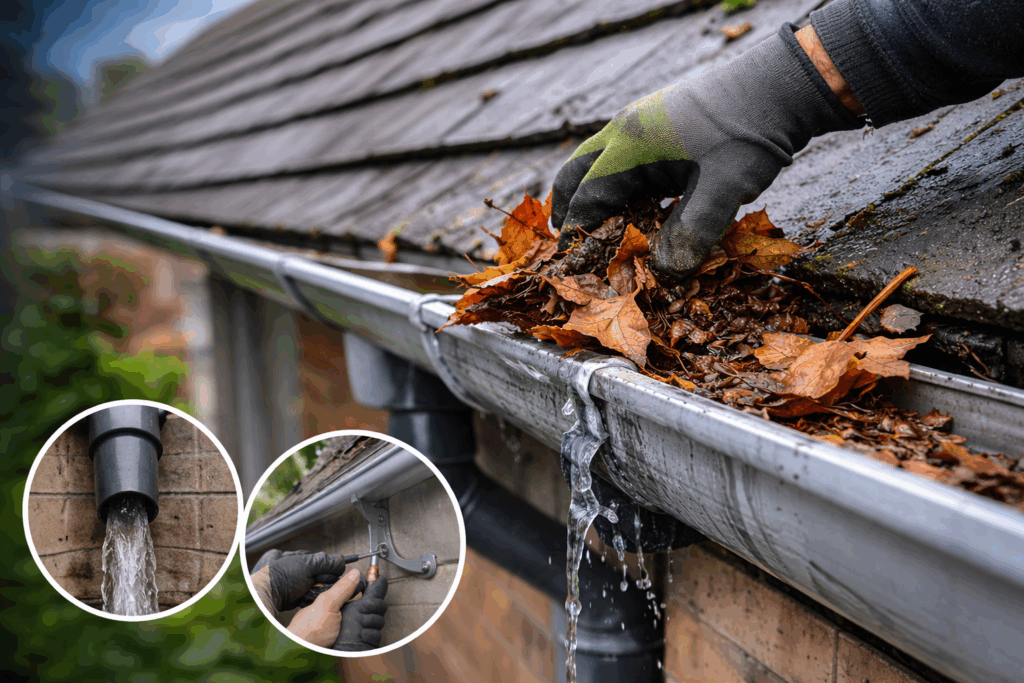
Gutters rarely fail overnight without warning. Instead, small blockages escalate into major structural stress. Common causes include:
- Wet leaves and organic debris forming dense blockages
- Frozen water expanding inside downpipes during cold nights
- Poor water flow due to misaligned gutters
- Undetected cracks or weakened brackets
- Overflow from blocked downpipes during heavy rain
When water has nowhere to go, the weight builds rapidly causing gutters to pull away from fascia boards or even detach completely.
Step 1: Clear All Visible Debris Immediately
The first and most important step is to remove all surface-level blockages from your gutters.
What to do this week:
- Remove leaves, twigs, moss, and dirt by hand or with a gutter scoop
- Flush gutters with a hose to identify hidden blockages
- Check downspout openings for compacted debris
- Ensure water flows freely toward the downpipe
Pro tip:
Even if gutters look “mostly clean,” hidden buildup near joints and corners is often where collapses begin.
Step 2: Inspect Downpipes for Blockages
Downpipes are the most common failure point in a clogged drainage system. If they’re blocked, water backs up into the gutter system and adds dangerous weight.
Warning signs of a blocked downpipe:
- Water spilling over the sides of gutters
- Gurgling noises during rainfall
- Damp patches near exterior walls
- Slow drainage after rain
What to do:
- Run water through the downpipe using a hose
- Use a plumber’s snake or drain rod for stubborn blockages
- Check ground outlets for overflow or pooling water
If the blockage persists, professional downpipe cleaning is strongly recommended to avoid hidden structural damage.
Step 3: Reinforce and Secure Gutter Brackets
Once water flow is restored, the final step is ensuring your gutter system can handle future rainfall safely.
Key checks:
- Tighten loose or rusted brackets
- Replace cracked or bent gutter sections
- Ensure correct slope toward downpipes
- Reinforce areas showing sagging or separation
Why this matters:
Even clean gutters can collapse if the mounting system is weakened. Brackets carry the full weight of water during storms especially in high-rainfall periods common in regions like Germany.
Bonus Prevention Tips (Long-Term Protection)
To reduce the risk of future gutter collapse:
- Schedule seasonal gutter cleaning (at least twice per year)
- Install gutter guards to block debris entry
- Trim overhanging trees near your roofline
- Inspect gutters after major storms
When to Call a Professional
If you notice any of the following, immediate professional help is advised:
- Gutters pulling away from the roof
- Persistent overflow despite cleaning
- Visible cracks or separation at joints
- Water damage on exterior walls or foundations
Downpipe Cleaning & Unblocking provides fast, reliable service to restore safe drainage and prevent expensive structural repairs.
Final Thoughts
Preventing gutter collapse doesn’t require months of preparation just fast, focused action. By clearing debris, checking downpipes, and securing brackets, you can significantly reduce the risk of damage this week.
If you’re unsure or dealing with severe blockages, professional inspection is the safest solution to protect your property long-term.